

What comes next?

By Ruth Nicolaus, For The Fence Post
April 3, 2026

Moving on after the Nebraska fires
In the last few weeks, Nebraska has suffered the biggest wildfires in recorded history.
Over 820,000 acres have burned among four fires: the Morrill Fire in the west Sandhills (the largest of the four); the Cottonwood Fire (west and southwest of Gothenburg), and the Ashby and Minor Fires (around Ashby and south of Hyannis.)
The fires are out, but what happens next?
In pastures and in the Sandhills, the plants will grow back, said Mitch Stephenson, range management specialist at the University of Nebraska-Lincoln Panhandle Research Extension and Education Center in Scottsbluff.
Wildfires that take place during the dormant season have a less negative effect on plants, and those plants will come back, he said. Because the plants’ roots, crowns and buds are underground, the plant will return.
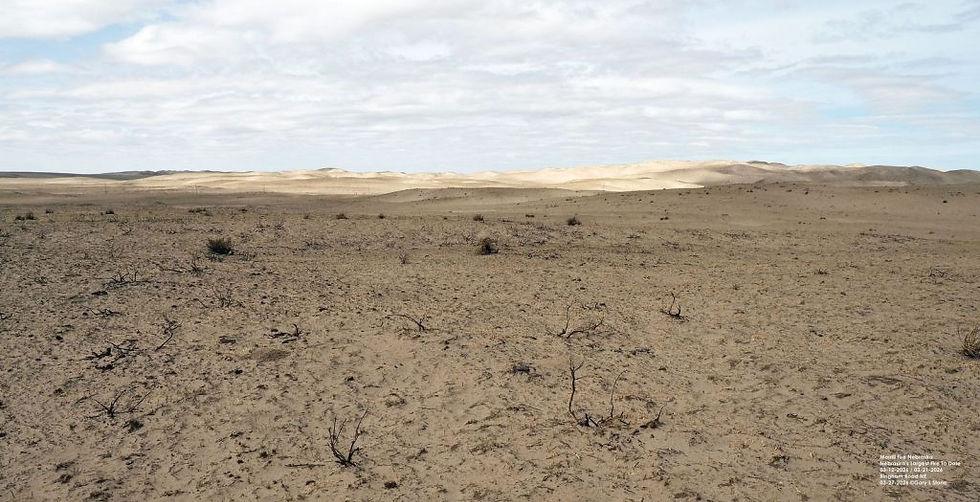
“Most plants have mechanisms in place for fire,” Stephenson said. “Our grasslands are fairly resilient. They’ve had fire for eons.” One of the bigger detriments to grass fire is the loss of plant litter, or the layer of dead plant material, like leaves and stems that accumulates on the ground. Litter is a natural insulating blanket for the soil, protecting against heat,moisture loss and erosion.
“The big thing we talk about is how we build back that standing litter and cover what’s on the ground,” he said. “That’s what keeps the very top layer of soil from moving around as much, and keeps the ground cool.”
Precipitation is the deciding factor in how fast the grass grows back. Most of the state is behind in average precipitation by 35 percent, year-to-date.
It is often recommended that producers wait to put cattle out to graze following wildfire in the western Great Plains to allow some growth of vegetation. With adequate precipitation, a lot of recovery can happen the growing season following wildfire. With drought conditions, it will likely take longer.
Lower stocking rates are often recommended to allow for more build up of plant litter. “If you’re looking to build back the (plant) litter, you probably need to consider a lighter stocking rate if you plan to graze this growing season.”
UNIQUE ECOLOGY
The Sandhills have their own unique ecology, and much of the Morrill, Ashby and Minor Fires burned in the Sandhills. Plants anchor the sand, keeping the dunes from blowing.
Top layer of sand will blow, Stephenson said, but there’s a good layer of roots in the first foot of soil (and deeper), and that will hold it in place.
“There’s as much biomass in the roots as there is above ground,” he said. Time lapse cameras placed in the area by Nebraska Extension document the sand blowing from one side of the hill to another, depending on the wind direction.
“That very top layer of sand is moving,” he said. “And that will happen until the grass grows and helps hold it in place.”
South and west of the Morrill Fire, the Cottonwood Fire burned in the Gothenburg and Brady areas.
Most of that fire burned pasture, but some cropland burned too, said Todd Whitney, Nebraska Extension cropping systems and water educator based in North Platte.
Like grassland, the concern on burned crop ground is erosion and the lack of plant litter and organic matter. Because of a lack of shade due to no organic matter, soil temperatures are running 10 to 15 degrees above normal, he said, and planting may start sooner.
One of the side effects of fire is that the cropland seems to be crusted, he said, “like a shake and bake. There’s something that causes the heat from the fire to seal the soil surface. It’s not a normal feel to the soil. It has a crusted feel, a hardness to it.”
Water, either in the form of precipitation or irrigation, breaks that crust, but till the crust breaks, the water doesn’t seem to be absorbed into the soil, he said.
Fire also consumes nutrients like nitrogen, phosphorous and potassium. If nitrogen was applied before the fire and didn’t have enough moisture to be absorbed into the ground, it was lost. Whitney recommends getting soil samples to see what nutrients need to be applied before planting.
FORAGE DEFICIT
Even before the fire, producers were considering crops other than corn and soybeans, due to high input costs. Now, there’s talk of raising forages for cattle feed in places that lost pasture. Hay has been donated, but not enough to last for months until grass is ready for grazing.
“It would be very tough for producers to have to truck in forage,” Whitney said. “We’ve had caravans of round bales but it’s going to take a lot to keep feed going.
“One of the men who is switching part of his crop ground from the conventional corn and soybeans to forage is Joe Wahlgren and his family, of Canyon Farms near Brady.
Wahlgren is working on a solution, at least to help the people around him. He plans to plant about 10 percent of his acreage to forage and graze his neighbors’ cows on it. It’s irrigated and with a relay grazing system, it will have forages on it through the year.
It’s already been planted to rye as a cover crop. He’ll add more cool season grasses (oats and barley), then, in mid-June, terminate those plants and add sorghum, sudangrass seed and hybrid pearl millet.
He figures on grazing two to three cows per acre under the pivot, and with the sorghum, sudangrass and millet, have enough to make into hay or silage. Then in the late summer or fall, he’ll go back to wheat, oats and turnips to carry the herd into the winter.
“As irrigated agriculture, we stand poised to help solve the problem in an economic environment that doesn’t make any sense for me to grow one more field of corn,” he said.
He’s contacted four neighbors who lost pasture and will put their cattle on his grass. The details for payment haven’t been worked out, but that will come with time.
“I’d just try to get back our rent and irrigation costs,” he said. It’s estimated that about 50 percent of the Loess Canyon Group, (the hills that burned in the Cottonwood Fire) were burned.
Wahlgren’s goal with offering to help four ranchers is “to keep families from liquidating their genetics they’ve worked on their whole lives, or from moving their cattle and paying exorbitant freight for shipping and trusting somebody else to raise them,” he said. “We’re here, we can work out the problem here together.”
His rough estimate is that there are between 35,000-40,000 cows without pasture, and if the drought across the state extends into the summer, “Nebraska is going to be looking for a home for several million cows,” he said.
Raising forage for an entire growing season will benefit his ground, he said, estimating that 20-plus tons of forage will be raised “and run through a cow,” he said. “I’ll have 15 tons of manure on that ground and 10 to 12 times the microbial activity.”
He doesn’t want any credit for helping.
“God gave me the tools to help somebody in my circle,” he said. “I would love for others to look in their circle and see who they can help in that way. I want other people to catch on to this, but they have to be quick about it,” to get forages planted soon.
Wahlgren knew he had to do something. “I called a couple of friends (affected by the fire) and asked, ‘what do you have for plans?’ They said, ‘Nothing. We’re living day by day, trying to keep our heads above water.'”
After the fires, life got back to normal for him, but not for his neighbors. He said, “I’m ready to go farm and move on with my life, and these guys have lost their equipment, have melted siding on their houses, have lost animals. And I said, this isn’t right, that I can move forward. And the Holy Spirit wouldn’t let me get away from” that thought.
Informational meetings on wildfire recovery will be held April 8-10. Hosted by Nebraska Extension, the Farm Service Agency and Natural Resources Conservation Service, they will provide information to help farmers and ranchers learn about available resources and address local needs. The April 8 meeting is in Arthur at the Veterans Memorial Hall; April 9 is in Brady at the Community Center, and April 10 is in Oshkosh at the City Auditorium. All three meetings are scheduled from 3:30-6 p.m. local time, with a meal served at 6 p.m. by Hot Meals USA to encourage group conversations and idea sharing. Whitney said relief funding can be in the form of a loan, or assistance in planting cover crops, for livestock losses, or a variety of different ways. Funding is on a first-come, first served basis and is limited.



Article: The Fence Post, April 3, 2026


