

Colorado to pull back on killing wolves involved in livestock attacks as survival concerns rise

By Ali Longwell, Vail Daily
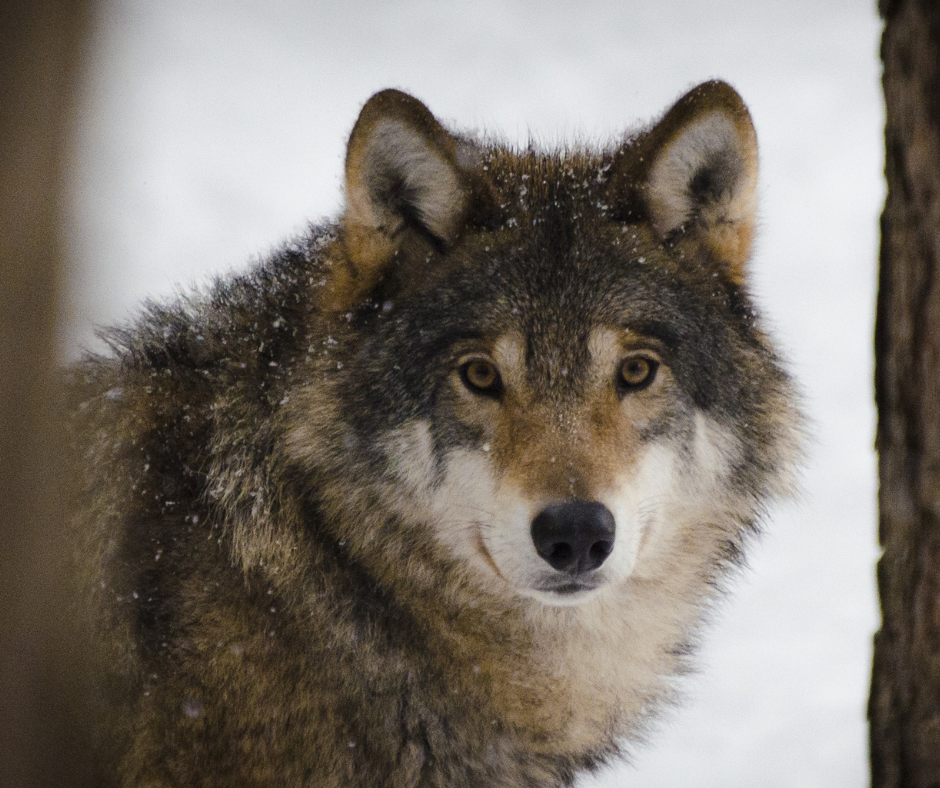
Colorado Parks and Wildlife announced on Wednesday, Sept. 30, that it will be taking a more conservative approach to deciding whether or not to kill wolves that are repeatedly attacking livestock — citing rising concerns over how potential disease, wolf pup survival, mortality rates and uncertainty around future releases could impact the nascent population of gray wolves.
The management change comes after the state wildlife agency has killed five wolves this year — four between Aug. 4 and Sept. 9 — that met its definition of “chronic depredation.” This definition, guided by Parks and Wildlife’s chronic depredation management directive, establishes that wolves can be killed if they are tied to three livestock attacks in 30 days, so long as the affected producers have attempted “all viable options” to mitigate conflict non-lethally.
In a Wednesday news release, Parks and Wildlife shared that there are an estimated 45 wolves in Colorado as of Sept. 24, including 20 pups that were born to four wolf packs this spring. It indicated that it is tracking several factors that could limit these wolves’ survival in the coming months.
The agency warned that between 50-60% of pups survive their first year in populations of gray wolves in the West. While pup survival in Colorado exceeded that statistic last year — hitting an 82% survival rate — Parks and Wildlife said it still expects the current number of pups to decline over the winter at some rate.
For adult wolves, survival between April 1, 2025 and May 31, 2026, was 61%, below the 75% survival rate typical for gray wolf populations. These mortalities have been largely associated with human activities, including one killed by a hunter and one accidentally killed during a Parks and Wildlife routine collaring operation. In addition to the five wolves it has euthanized, four other wolves have died in Colorado since Jan. 1.
Parks and Wildlife also reported that it is investigating “evidence of hair loss in multiple wolves in two packs in northwest Colorado, which could be associated with an infectious skin parasite and, if so, could impact wolf survival.”
Colorado’s voter-mandated wolf reintroduction started in December 2023 and requires the state wildlife agency to recover and maintain a self-sustaining population of gray wolves while minimizing conflict with livestock and people.
Parks and Wildlife reported that the challenges facing the current wolf population in Colorado led to its decision to re-evaluate future euthanizations of wolves that are involved with repeated livestock attacks.
TEMPORARY SUSPENSION
This is not an end to the state killing wolves that are preying on livestock, however. Travis Duncan, a public information officer for the agency, said that it is temporarily suspending the chronic depredation management directive but will consider “any future removals of wolves” on a “case-by-case basis using this very conservation approach.”
This, the agency adds, meets a stated goal of its wolf plan to consider the following trade-offs when determining whether or not to kill a wolf predating on livestock: “wolf reproductive and recruitment success, wolf population size and listing status.”
The release adds that Parks and Wildlife has a responsibility, per the plan, to monitor and adjust when it makes these determinations because “excessive levels of lethal removal can inhibit the recovery of wolf populations.”
“Our current genetic analysis demonstrates that the wolf population has high diversity, indicating that inbreeding is not a hurdle to wolf recovery,” said Laura Clellan, director of Parks and Wildlife, in the news release. “While this is promising news for the program, achieving a successful reintroduction effort and a self-sustaining population of wolves will require doing everything we can to ensure the survival of existing wolves in the state.”
According to Parks and Wildlife, the agency will revisit its chronic management directive — first published in December 2024 — and make changes by April 2027. This includes working to address two citizen-submitted petitions to the Parks and Wildlife Commission, which request the agency make changes to how it compensates producers for wolf-related livestock damages, as well as implement stricter rules in its chronic depredation process.
RANCHER CONCERNS
Tim Ritschard, a Grand County rancher and president of the Middle Park Stockgrowers, expressed concerns over what the more conservative approach could mean for the rising conflict facing producers.
“Lethal removal is a management tool that needs to be used,” he said in an emailed statement. “We have had a record number of depredations — even with more range riders and non lethal tools in place. We only have roughly 30 wolves and lethal removal is already being stopped. What is going to happen when we reach 200 wolves?”
As the agency cools on its euthanization of wolves predating on livestock, it will reportedly extend its range rider season based on conflict and producer willingness, continue to support the use of non-lethal conflict minimization tools, apply timely compensation for livestock losses and more.
“We’re doing everything we can to meet our objective of a sustainable population while working with livestock producers and continuing to follow the adaptive guidance provided in the Wolf Restoration and Management Plan,” Clellan said in the release. “Right now, we’re in a critical moment for wolf restoration in Colorado.”
Part of the concern is whether Colorado will be able to find a source for a third year of wolf releases this winter. Its wolf plan recommends that Parks and Wildlife release 30-50 wolves in the first three to five years of reintroduction to work toward building a sustainable population of wolves. While the agency released 10 wolves in the first year and 15 in the second, its plan to release additional animals in the third year was thwarted by a change in federal direction, prompting a year pause in releases.
Now, with the clock ticking, the agency is searching for a source that complies with the new U.S. Fish and Wildlife Service direction so that it can release wolves this winter. Several states — including Idaho, Wyoming, Montana and Washington — have either declined to provide Colorado wolves or say they have not engaged in discussions this year. Oregon and the Confederated Tribes of the Colville Reservation in Washington did not respond to earlier requests for comment on their potential involvement.
The conservative approach to killing wolves involved in livestock conflicts is welcomed by wolf and wildlife advocacy groups who have previously called for the agency to outright ban the practice given the current concerns around Colorado’s wolf population.
Courtney Vail, board chair of the Rocky Mountain Wolf Project, said the announcement was “well-received” and showed Parks and Wildlife’s commitment to being “adaptive and responsive to the realities on the ground in Colorado.”
“With multiple uncertainties surrounding the wolf program currently, including the inability to source wolves for additional translocations; impacts from disease; high mortality rates from anthropogenic causes; and uncertain pup survival, all indications from the agency point to the potential erosion of progress towards the statutory requirement of a self-sustaining population,” Vail said.
Other groups expressed an interest in continuing to help livestock producers mitigate conflict while supporting Parks and Wildlife’s wolf effort.
“These are the hard decisions we trust CPW to make, and we know they don’t make them lightly,” said Kaitie Schneider, the Colorado representative for Defenders of Wildlife. “The purpose of this reintroduction program is to have a self-sustaining wolf population and to support the communities and ranchers who will live alongside them. Defenders will continue to provide support to CPW and producers to ensure both ranching operations and wolves can thrive on our landscape.”
SOURCE: theFencePost, October 1, 2026


